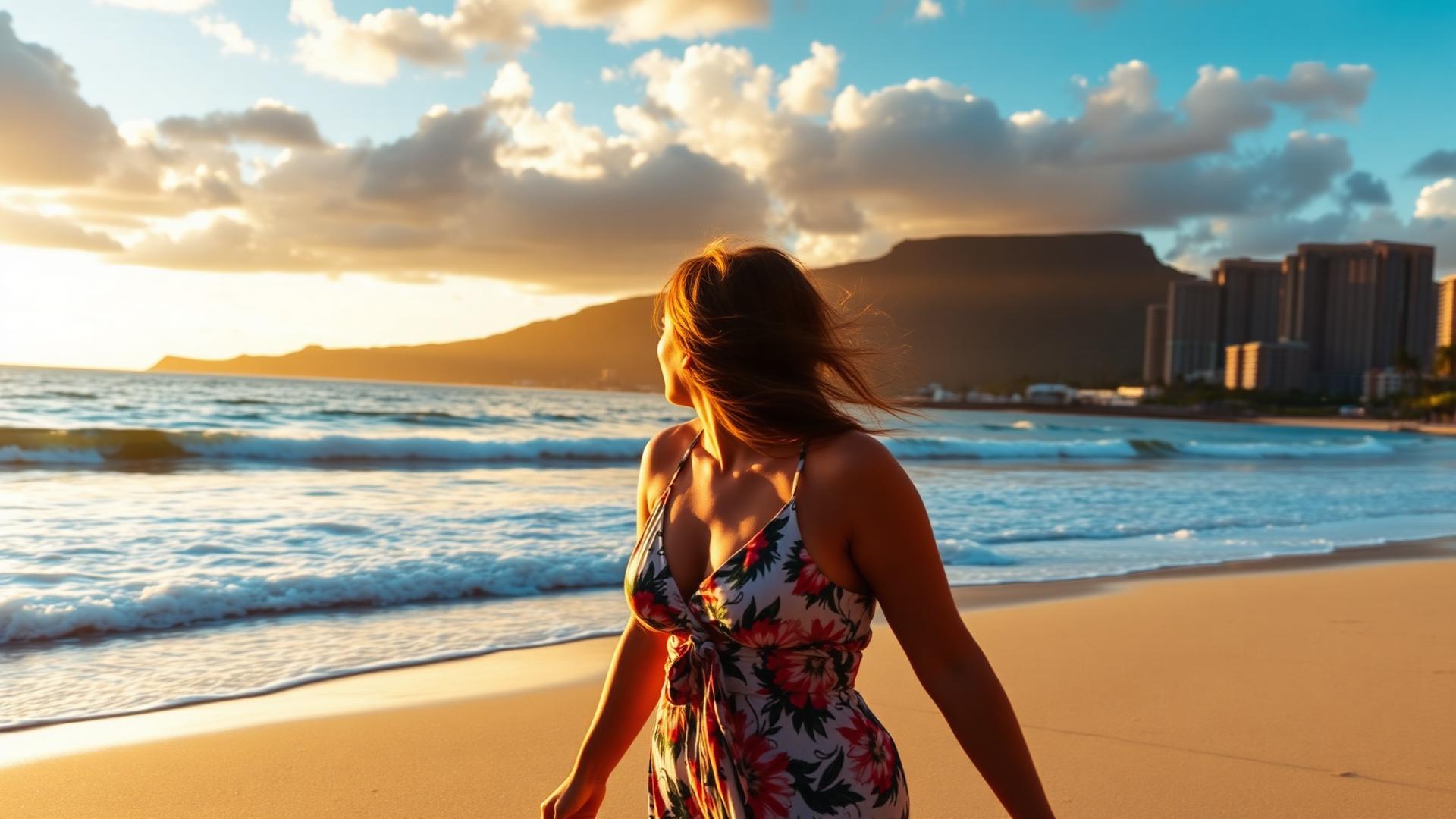
The birthplace of modern surfing
Waikiki is more than a beach — it's where Duke Kahanamoku introduced surfing to the world a century ago, and where first-time surfers still paddle out today on long, forgiving rollers. The two-mile crescent of golden sand fronts the Honolulu skyline, with Diamond Head's volcanic silhouette anchoring the eastern end.
Yes, it's busy. Yes, it's developed. But step into that 80°F water at sunrise, watch outrigger canoes glide by, and you'll understand why generations of travelers have fallen for this stretch of Oahu.
Best time to visit
Hawaii's weather is gloriously consistent — expect 75–85°F year-round. April through June and September through mid-December offer the sweet spot of fewer crowds and lower prices. Avoid Christmas week and Japanese Golden Week (late April / early May) unless you booked months ahead.
What to do
Take a group surf lesson at Canoes break — it's the most beginner-friendly wave on the planet. Hike Diamond Head at sunrise (reservations required) for a 360° view of the island. Snorkel Hanauma Bay, drive the windward coast to Kailua, or catch a sunset catamaran from the beach in front of the Hilton Hawaiian Village.
Don't leave without a plate lunch from Rainbow Drive-In, shave ice from Waiola, and at least one luau — Paradise Cove and the Polynesian Cultural Center are the most authentic.
Where to stay
Beachfront hotels (Royal Hawaiian, Halekulani, Moana Surfrider) are splurges with unbeatable access. One block back, you'll find dozens of mid-range towers at half the price. For a quieter vibe, base in Kakaʻako or Kahala and visit Waikiki for the day.
Local tips
Use TheBus or the Waikiki Trolley — parking is expensive and limited. Always carry reef-safe sunscreen (oxybenzone is banned). Learn a few words of Hawaiian — 'mahalo' (thank you) and 'aloha' go a long way. And respect the ocean: check surf reports and never turn your back on the waves.